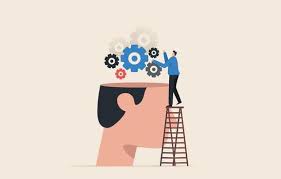
In the EKTEP(East Kootenay Teacher Education Program), we are asked to reflect on how we feel that our growth is going in our classes, our practicums, and our personal pedagogies. This is something that, as an educator, is so important because if we don’t reflect, then we don’t have a clear view of where our biases or blind spots are, which means our students don’t get the greatest possible opportunity to learn without barriers. If we aren’t reflecting, we also aren’t able to see where we need to grow, which doesn’t allow us to be true lifelong learners and practice using a growth mindset. Now there are many different ways to reflect, and that is up to personal preference and can also change from situation to situation, what you think will allow you to go deepest with your thoughts and really apply yourself to deep reflection.
This class introduced us to two different thinking models for reflection: Graham Gibbs Reflective Cycle and Robert Boyd Reflective Cycle. Working with both cycles helped me better understand how reflection can support not only immediate improvement in teaching but also deeper professional growth over time and how each one has a time and a place.
Gibbs’ Reflective Cycle is very rigid; it has six clear steps to follow: description, feelings, evaluation, analysis, conclusion, and action plan. I found that this model helps me break down my teaching experiences, presentations, and In-Situ’s in a clear way that allows me to see what works, what doesn’t, what I liked, and what I didn’t like. After I teach a lesson, I can use each step to break down the lesson in a systematic way, which works best with my brain and how I think. Having specific prompts to think about and guide me through my thoughts about the experience helps me to reflect deeper on those things. For example, when I was on my practicum last year, I was teaching a lesson, and after the fact, I felt off about it, so I took some time to reflect. Specifically using the evaluation step, it brought me to see I didn’t completely define a term when I went back through my lesson plan, which means I probably didn’t say it to the class, and that’s why it felt like I was losing students. Doing this allowed me to pinpoint exactly where I went wrong and redirect it. This was crucial for me for my lesson because it was just an introduction lesson, and I was able to come back the next day with a plan of how I was going to make sure I bring it back into the lesson.
In contrast, Boyd’s Reflective Cycle is less rigid, which, for me, I find a lot harder because it is focused on internal thoughts and responses. I struggle and end up focusing more on what the right and wrong points are to focus on instead of what happened within those points. Instead of following a rigid sequence of prompts, Boyd’s model promotes deeper thinking in certain ways and pushes you to further reflect on what stood out specifically to you about the experience. I found that without prompts, I often struggle to engage in deeper thinking, and I’m looking more at how to organize my thoughts. For example, Boyd’s model could help me reflect on how my beliefs about student behaviour or engagement are shaping my teaching decisions, rather than just focusing on whether a lesson “worked” or not.
Both of the models have their time and place in teaching and how we use them to grow as professionals. Gibbs’ model is more accessible and useful for day-to-day reflection, especially for beginning teachers who benefit from clear guidance. Boyd’s model, however, supports deeper reflective practice by encouraging critical thinking about who I am as an educator and how I contribute to equitable learning environments.
For me, I think that this aligns with UVIC’s Teacher Education Program Competencies 1-4, which are under the heading Personal and Professional Preparation. When we are reflecting, we are refining who we are as people and growing so that our students get the best, most prepared version of us. I think that reflecting allows us to come prepared every day because we evaluated what went great and what went wrong the day before, and grow from it both personally and professionally, allowing us to become more and more prepared. When we reflect, we grow in our growth mindset and learn, we continue professional growth, and demonstrate an understanding of the complexity of both teaching and learning.
Sorry, but comments are not enabled on this site.